
Choose Connection Over Ego in Relationships
Community, Personal Growth, Relationships
Checking Your Ego at the Door: Choosing Connection Over Being Right
In every community—whether it’s a workplace, a neighborhood group, a faith circle, or a friend group—there comes a moment when you have to decide: will you protect your ego, or protect the connection? Learning to “check your ego at the door” is less about shrinking yourself and more about making room for genuine, human relationships.
Humility: The Quiet Foundation of True Community
Communities thrive not because everyone agrees, but because people feel safe enough to be honest. Humility is what creates that safety. It says, “I don’t know everything. I can learn from you. Your experience matters as much as mine.”
When humility is present, conversations shift. People listen longer. They interrupt less. They ask questions instead of delivering verdicts. The goal stops being to win the room and becomes to understand the people in it. That’s where genuine connection is born—when we allow ourselves to be curious, imperfect, and open to being changed by what we hear.
In any community setting, humility is the difference between a group that performs together and a group that grows together. One is about image; the other is about transformation.
How Ego Distorts Our Behavior and Perception
Ego isn’t always loud or obvious. Sometimes it looks like silence, distance, or a polite smile that hides resentment. At its core, ego is the part of us that needs to feel important, right, or superior. When we lead with that need, it subtly reshapes how we see everything around us.
We take things personally. A simple suggestion feels like an attack. Feedback becomes an insult instead of an invitation to grow.
We compete instead of collaborate. Someone else’s win feels like our loss, so we downplay their ideas or rush to prove we can do it better.
We rewrite motives. Instead of assuming good intent, we fill in the gaps with suspicion: “They’re just trying to show off,” or “They don’t respect me.”
Over time, ego can quietly isolate us. We feel misunderstood, overlooked, or underappreciated—yet we rarely see how our defensiveness, criticism, or withdrawal may be pushing others away. Checking our ego at the door means pausing long enough to ask, “Is this really about what’s happening, or about how I want to be seen?”
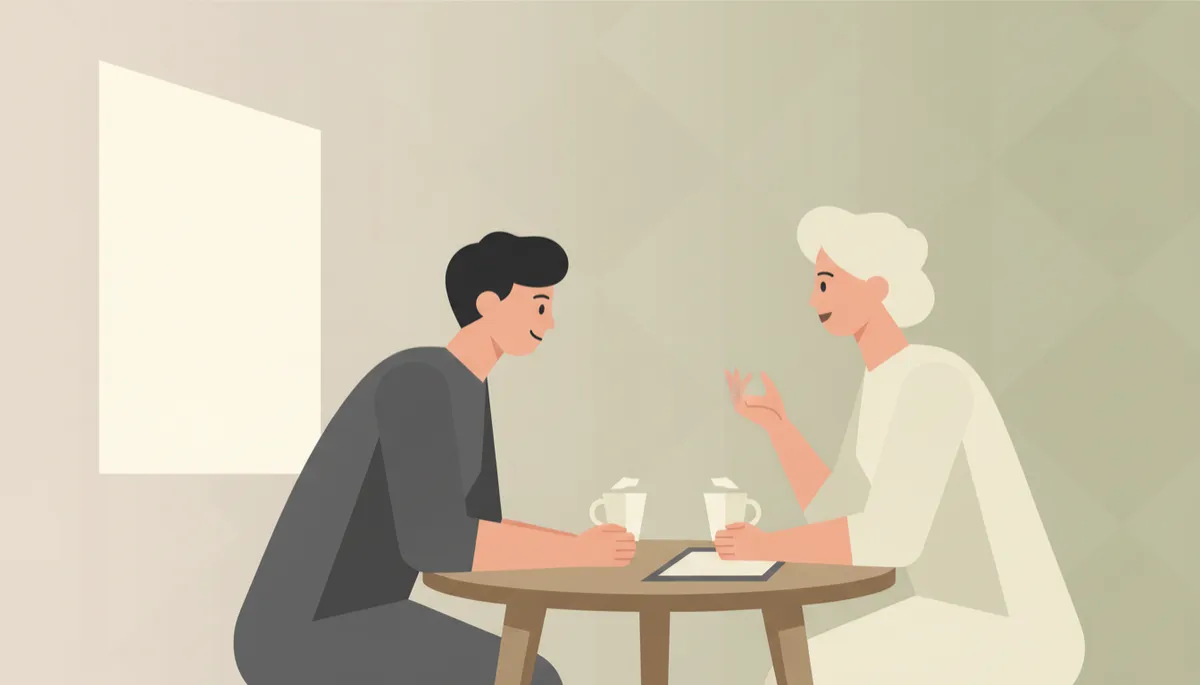
Honest, ego-free conversations often begin with one person choosing to really listen.
Gentle Ways to Help Someone Explore Their Motives
Helping someone see their own ego patterns is delicate work. Pushing too hard can trigger more defensiveness. The goal isn’t to expose them; it’s to invite them into self-awareness. A gentle approach respects their dignity while still telling the truth.
Lead with your own vulnerability. Instead of “You’re being defensive,” try, “I’ve noticed in myself that when I feel overlooked, I jump in to prove a point. I’m wondering if anything like that might be happening for you right now?”
Ask open, curious questions. Questions like, “What felt hardest about that conversation for you?” or “What were you hoping others would see or understand?” help them reflect without feeling attacked.
Reflect what you see, not who they are. Focus on behavior, not identity: “When your idea wasn’t chosen, I noticed you went quiet and pulled back. How did that feel?” This keeps the door open to change.
💡 A Reflective Ripple: Use “I” language (“I noticed…”, “I felt…”) to reduce defensiveness and model the kind of self-reflection you’re inviting.
Sometimes the kindest thing you can do is offer space: “If you ever want to process that meeting, I’m here.” Growth rarely happens on demand. It unfolds when people feel safe enough to look honestly at themselves.
Beyond the Room: Ego, Growth, and Everyday Relationships
The lesson of checking your ego at the door doesn’t end with meetings or group discussions. It touches every corner of life: how we argue with a partner, respond to a friend’s success, or handle a child’s challenge to our authority. In each moment, we’re choosing between protecting our image and protecting the relationship.
Personal growth often begins with simple shifts:
Saying, “You’re right, I hadn’t considered that,” instead of doubling down.
Admitting, “I reacted from a place of insecurity,” and repairing quickly.
Celebrating others without comparing yourself in the background.
Over time, these choices reshape how we show up. Relationships feel lighter, conversations feel safer, and conflicts become opportunities instead of threats. Checking your ego at the door is not about erasing your voice; it’s about anchoring it in honesty, humility, and respect—for yourself and for the people you’re walking alongside.
In the end, the rooms that change us most are rarely the ones where we proved we were right. They’re the ones where we allowed ourselves to be real, to be wrong, and to be reshaped by the people around us. That’s the quiet power of leaving your ego at the door—and choosing connection instead.