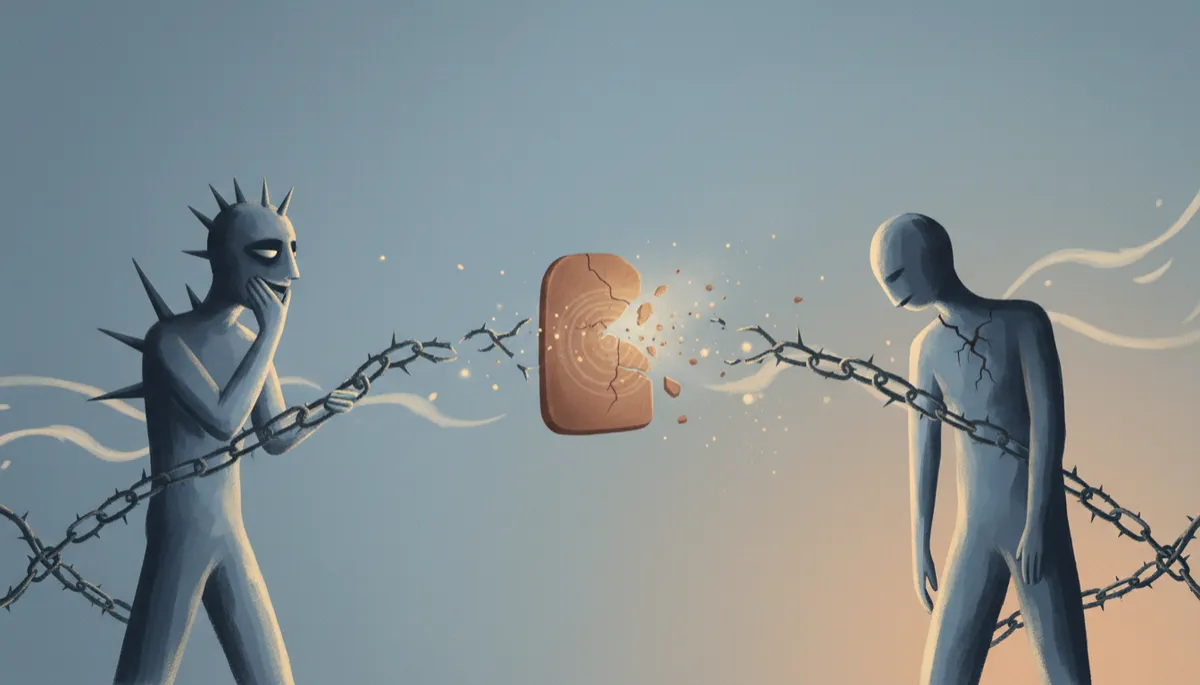
Healing Relationships: Overcoming Mockery's Quiet Damage
Relationships, Emotional Health, Faith
The Quiet Damage of Mockery: Choosing Honesty and Healing in Our Relationships
Mockery can feel like harmless humor in the moment, but over time it erodes trust, safety, and closeness. Drawing on Proverbs 21:23–24, this article explores how sarcastic words and avoided conversations slowly harm relationships—and how someone who has relied on mockery can face their own emotions, seek healing, and build more honest, loving connections.
What Proverbs 21:23–24 Teaches About Our Words and Attitude
Proverbs 21:23–24 (NIV) says, “Those who guard their mouths and their tongues keep themselves from calamity. The proud and arrogant person—‘Mocker’ is his name—behaves with insolent fury.” These verses connect three powerful ideas: self-control, pride, and mockery.
First, we are told that guarding our mouth protects us from “calamity”—from the painful fallout that comes when words cut deeper than we intended. Second, the “mocker” is described as proud and arrogant, someone whose attitude says, “I am above you.” Mockery isn't just about jokes; it's a posture of the heart that quietly declares others smaller, weaker, or less worthy.
How Mockery Harms Relationships, Even When It Sounds Like “Just Joking”
Mockery often hides behind humor: “Relax, I was only kidding.” But for the person on the receiving end, it rarely feels like a joke. Over time, these “small” comments can create deep emotional bruises. They send messages such as:
Your feelings don’t matter.
You’re not safe to be vulnerable here.
If you show weakness, I will use it against you.
When someone repeatedly mocks a spouse, parent, friend, child, or colleague, the relationship slowly shifts. Instead of being a place of comfort, it becomes a space of quiet defensiveness. The other person may stop sharing honestly, expecting their thoughts or struggles to be turned into a punchline. Eventually, distance grows where closeness once existed.

Over time, sarcastic jabs teach people to protect themselves instead of opening their hearts.
Avoiding Honest Conversation: The Silent Partner of Mockery
Mockery often appears when honest conversation is missing. Instead of saying “I feel hurt,” “I’m afraid,” or “I need something different from you,” a person may use sarcasm or criticism to release tension without revealing vulnerability. It is easier to make a joke than to admit, “That really wounded me.”
Over time, this pattern creates a dangerous cycle:
A genuine feeling—hurt, disappointment, fear—rises up.
Instead of naming it honestly, the person uses mockery or avoidance.
The real issue never gets resolved, so resentment quietly grows on both sides.
Trust slowly erodes, and the relationship feels increasingly shallow or tense.
📌 A Reflective Ripple: Proverbs 21 links careless words with calamity for a reason. When we avoid honest conversation and rely on mockery, we are not just “venting”—we are quietly dismantling the safety and trust that relationships need to thrive.
If You’ve Always Used Mockery: Facing Your Own Emotions with Courage
If you recognize yourself in this pattern, it doesn't mean you are beyond hope, and it isn't a reason to dwell in shame. It means your eyes have been opened and you are being invited into growth. Mockery is often a learned way of coping with discomfort, shame, or fear. Healing begins when you dare to ask, “What am I really feeling underneath the joke?”
1. Name What Mockery Has Cost You—and Others
Start by honestly reflecting:
Have people withdrawn from you or stopped sharing deeply?
Have loved ones ever told you your “jokes” hurt them?
Do you feel lonely, even when you are surrounded by people?
Naming the damage is not about drowning in guilt; it is about seeing clearly so you can choose differently. This is part of “guarding your mouth” in a new way—by becoming aware of the impact your words have had.
2. Turn Mockery into Curiosity About Your Emotions
Each time you feel the urge to make a cutting remark, pause and ask yourself: “What am I actually feeling right now?” Common emotions hiding under sarcasm include embarrassment, insecurity, jealousy, and fear of rejection. Instead of lashing out, try silently naming the feeling: “I feel small,” “I feel ignored,” “I feel scared I’m not enough.”
💡 A Ripple to Remember: Keep a small journal or note on your phone where you record moments when you wanted to mock someone. Write down what was really happening inside you. Over time, you will begin to see patterns that help you respond more gently and honestly.
3. Practice Honest, Humble Communication
Healing relationships means replacing mockery with truthful, respectful words. That might sound like:
“When that happened, I felt left out and hurt.”
“I realize I’ve been joking at your expense. I’m sorry. You deserve better from me.”
“I’m not used to talking about my feelings, but I want to try.”
These kinds of statements may feel risky at first, especially if you have long relied on humor as armor. But they open the door to the kind of honest, emotionally safe relationships your heart has likely wanted all along.
4. Invite God—and Trusted People—Into the Process
Proverbs 21 reminds us that God cares deeply about how we use our words. You can bring this struggle to Him honestly in prayer: “Lord, help me guard my mouth. Show me where my pride and mockery have hurt others, and teach me to speak life instead.” You may also find it helpful to talk with a counselor, pastor, or trusted friend who can gently hold you accountable and encourage you as you grow.
Moving Toward Healing and Honest Relationships
Mockery may have been your default for years, but it does not have to be your destiny. By listening to the wisdom of Proverbs 21:23–24, you can choose a different path: one where you guard your tongue, confront your own emotions with humility, and speak to others with respect and care. As you do, relationships that once felt tense or distant can slowly become places of honesty, safety, and genuine connection.